Los Angeles evenings invite you outside. The air cools, the hills silhouette against a violet sky, and the hum of the city softens. Done right, landscape lighting lets you enjoy all of that while quietly solving practical problems. Paths read clearly, steps become safe, faces look natural at the door, and your home feels watched over without feeling watched. The trick is balance. Too bright and your yard flattens into glare, neighbors complain, and wildlife detours. Too dim and you waste money without solving safety or security.
After two decades lighting properties from Santa Monica to Silver Lake to Studio City, I can tell you the best systems share a few traits: restraint, good optics, durable materials, and smart controls. They look beautiful yet stay out of the way. They guide you along without telling you where to look. And when you need them to act like a security system, they do.
What good lighting actually does
Start with the outcome. At night, your landscape needs to support three things: circulation, orientation, and character. Circulation is about walking safely from street to door to backyard. Orientation means you can read space quickly, find the latch, spot the step edge, or see where the driveway bends. Character is where style lives. That is the warm wash on a plaster wall, the soft halo on rosemary, the moonlight that lands on decomposed granite and makes it sparkle.
Security grows out of those same moves. Criminals prefer shadowy approaches and blind corners. When you put light where you move and where someone might hide, you reduce opportunity. Security lighting does not have to look like airport floodlights. In Los Angeles, where property lines are close and glare spreads fast, elegance usually equals effectiveness.
Know your setting: microclimates, codes, and the lay of the land
Los Angeles is not one climate. Coastal salt air near Pacific Palisades and Venice eats cheap fixtures. Canyons in Los Feliz and Laurel Canyon create deep darkness and steep approaches. Valley heat cooks plastics and brittle gaskets in Sherman Oaks or Woodland Hills. Flat lots in West Adams want tight control so you do not light the whole block. Hillside properties also care about fire risk, wiring stability, and brush clearance around hot lamps and housings.
On the regulatory side, California Title 24 governs energy use. Outdoor lighting must meet efficacy requirements, and controls need to shut things off when they are not needed. Motion sensors, photocells, or astronomical timers typically satisfy that. Look for fixtures with high efficacy LEDs and note BUG ratings across sensitive boundaries. Some neighborhoods, especially near wildlife corridors or higher elevation ridgelines, informally follow dark sky guidance. Warm color temperatures and shielded fixtures earn neighbor goodwill and reduce skyglow. If you are running new power from the panel, permits and GFCI protected circuits are not optional. Low voltage landscape systems typically tap a dedicated GFCI receptacle for the transformer, then distribute 12 volts through the yard.
HOAs sometimes set curfews or brightness caps. Ask before you dig. If you plan to integrate cameras, confirm your lighting approach supports the frame rate and exposure your devices need.
A layered design that works year round
The best nights start with a plan drawn to scale. You are after layers that fit the way you use the property.
Entry and address. A front door wants flattering light that makes faces easy to read. Use a warm 2700 K source with decent color rendering so skin tones look right. If you mount sconces, keep them dimmable and shielded to prevent lumen spill across the property line. The house numbers should be legible from the street, not blinding in your eyes as you approach.
Paths and steps. Los Angeles has a love affair with broken stone walkways and board-formed concrete stairs. Light them from the sides with shielded path lights or under-tread step lights. Avoid top-down glare that flattens textures or pops into your field of view. Place fixtures slightly off the walking line, staggered, so shadows do not stack. For step edges, continuous undercap lighting delivers definition without hot spots.
Driveways and gates. If your approach curves, low bollards or small floodlights with tight beams can mark the edge without turning the driveway into a stage. Gates benefit from downlights that cover the latch and address keypad. Make these motion-enabled to wake up when a car pulls in, then fall back to a low background.
Plants and architecture. Uplight mature olives, arbutus, or jacarandas with narrow to medium beams so the canopy reads without lighting the neighbors’ bedroom. Wash stucco or shou sugi ban fence panels to create depth behind low planting. Avoid lighting every plant. Pick two or three focal points and let the rest fall to shadow.
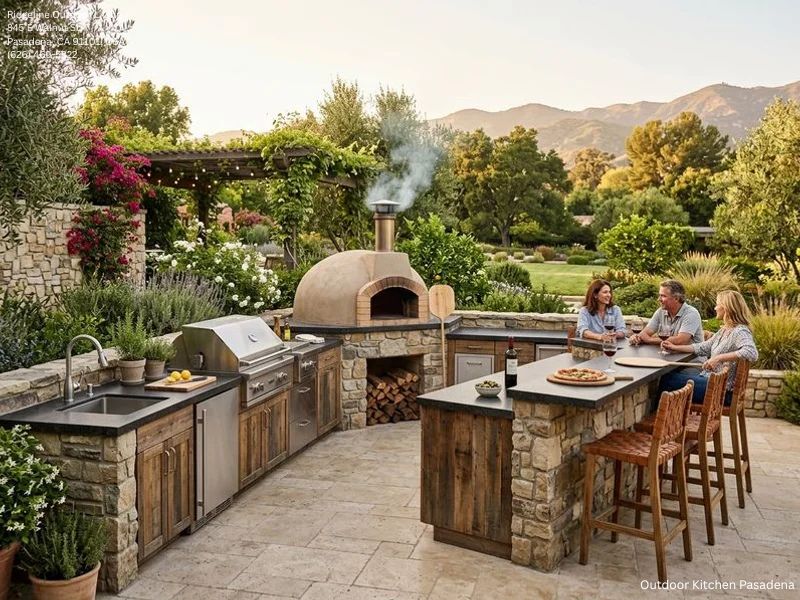
Backyard living. Dining terraces and outdoor kitchens need even, glare-free light. Consider downlight from pergola beams or discreet canopy fixtures with dimming. If you love the vibe of string lights, choose high quality, dimmable strands, and mount them at a height that avoids eye-level glare when seated. Keep them on scenes, not all night.
Pools and water. Water doubles the lumens if you forget about reflections. Light surrounding surfaces softly and let the pool’s own lights do their job. In the Valley, where insects can be relentless in summer, warmer color temperatures attract fewer bugs than cooler sources.
Moonlight without the pole lights. In larger trees, canopy-mounted downlights can mimic moonlight. Use small housings with glare shields and aim through leaves, not straight down on seating. Keep hardware gentle on the tree: stainless lag screws set shallow into healthy wood, no choking straps, and periodic adjustment as the tree grows.
Color, brightness, and beam control
Color temperature sets mood and affects security camera performance. Most Los Angeles homes read best at 2700 K outdoors, which feels like candlelight and flatters skin and warm materials. For architectural accents in crisp modern designs, 3000 K adds snap. Reserve 3500 K and up for specific tasks or camera-only zones, and even then, test. Many cameras handle 2700 K just fine if exposure and IR capabilities are tuned.
Brightness is measured in lumens at the fixture, but what your eye perceives depends on surface reflectivity, distance, and beam. A path light might produce 80 to 200 lumens, a small accent 200 to 400, and a wall washer 400 to 800. The goal is not numbers, it is balance. If a nearby streetlight or neighbor’s flood floods your front yard, you can use tighter beams and baffles to carve contrast rather than trying to overpower it.
Beam spread matters more than wattage. A 15 degree spot on the trunk of a sycamore makes drama, while a 60 degree wash opens a stucco wall without scallops. Use louvers and long snoots to hide the source. BUG ratings help you pick optics that keep spill in check. In tight urban lots, backlight is the enemy. Choose fixtures with shields that can rotate or clip to block light across the fence line.
High quality LEDs with 90+ CRI reveal the red in clay tile, the nuance in decomposed granite, and the green in citrus leaves. You do not need this level everywhere, but use it where people gather and where color matters.
Fixture types and where they serve you
Path and area lights. Small hats or domes on short posts, set back from the walkway, not in it. Avoid the runway look. Stagger and vary heights slightly to blend into planting. Resin and thin aluminum hats tend to warp in heat. Solid brass or copper weathers gracefully and survives coastal air.
Step and wall lights. Integrated into risers or undercap on seat walls. The best versions hide the source and glow softly on the tread. On tight masonry, plan the wiring routes before you pour or set stone.
Accent uplights. In-ground or small spotlights on stakes that aim into canopies or sculptures. Use long shrouds and glare guards. In hillsides with brush, prefer LED over old halogen. Halogen lamps get hot and can ignite dry mulch in the wrong conditions.
Downlights. Mount in eaves or tree canopies to pull textures out across the ground. Shield them well. Downlight is your friend for security because it reads shadows naturally. It also keeps light where you need it.
Bollards. Short posts that mark edges. They bring modern character but can dominate small spaces. Keep lumen output low and use optics that throw a precise slice, not a flood.
String and festoon. Fun for parties, less great as a full time plan. Keep them dimmable. Use commercial grade cords with UV resistant jackets. In Santa Monica and Manhattan Beach, salt and wind will test lesser products in a season.
Solar. The promise rarely holds up in shaded or urban lots. If you have a wide open, south facing area and want a few markers, go ahead. For security and primary circulation, wired wins every time.
Controls that make life easier
A photocell alone turns lights on at dusk and off at dawn. That wastes energy when you head landscaping guidelines to bed early. An astronomical timer knows the sun’s position year round and can stage scenes at set times without light sensors. Motion sensors add a layer that says we are paying attention. Use them at gates, side yards, and dark corners. Keep the default light level low, then ramp to full when motion hits. After a few minutes, drop back. That looks intentional, not aggressive.
Smart systems let you trigger scenes from your phone, tie lights to geofencing, or coordinate with security cameras. If you head this direction, pick a platform with reliable local control. Wi Fi only systems can lag or fail when your network hiccups. Landscape transformers with built-in zoning and dimming pay for themselves in programming flexibility.
California energy rules are friendly to this approach. Title 24 wants lights to be off when they are not needed. Astronomical timers plus vacancy sensors check that box and make it simple to live with.
Materials and build: what survives in LA
Salt air is relentless within a mile or two of the coast. Powder coated aluminum scratches and then corrodes from the nick outward. Cheap stainless stains. Use thick wall brass, copper, or marine grade stainless, and silicone gaskets that stay flexible in heat. Inland, UV wrecks plastics and gaskets. Again, quality shows in three years, not three months.
Ingress protection ratings matter. Aim for IP65 or better outdoors. For in-ground fixtures in irrigation zones, higher is better. Coiled drip lines that leak around fixtures can push water into housings. Plan irrigation head locations to avoid constant spray on lenses. Hard water spotting is a week away in many neighborhoods. A quick wipe during routine yard service keeps lenses clear.
Rodents chew low voltage wire. Run cable in conduit across open runs, especially along fences. Where you cross driveways, sleeve conduit deep enough that future work will not cut your lines.
Power and wiring you can trust
Most landscape systems run on 12 volt AC from a transformer that plugs into a GFCI outlet. Mount the transformer above grade, away from irrigation spray, and use stainless fasteners. Size the transformer with headroom. If your design needs 240 VA on paper, pick a 300 VA model. Voltage drop along long runs weakens distant fixtures. Keep runs short and plan hubs where several fixtures branch from a common point to even out load. Heavier gauge cable reduces drop. For long hillside runs, a 10 gauge main with 12 gauge branches may fix dim tails.
If you bring line voltage out to an outbuilding, conduit and permits enter the picture. Use a licensed electrician. Landscape lighting is forgiving, but a miswired junction box behind a stucco wall is not.
A security strategy that fits LA neighborhoods
Security layers work better than brute force wattage. Begin at the edge. Light your street address softly, so first responders and guests can find you. Wash the approach lightly. Illuminate the face of your gate and the area directly beyond it. Downlight the path to the door. Use motion at side yards and fence lines that are not on constant view. In backyards, create a low ambient level that lets you see movement, then spike brightness briefly with motion.
Cameras and light need to play nicely. Cameras that depend on visible light often hunt focus under poor spectrum. Test a sample fixture at 2700 K and 3000 K in the zone, and adjust gain and shutter settings. Many cameras include IR LEDs. If you rely on those, avoid bright white light near the lens that causes flare.
Avoid light trespass. Neighbors appreciate sleep. Shields, louvers, and careful aiming keep glare at home. You will get fewer complaints and keep your system on when you need it most.
Budgeting and the real costs in Los Angeles
A small front yard plan with 8 to 12 fixtures, a quality transformer, astronomical timer, and professional installation typically lands between 3,500 and 6,000 dollars depending on access, trenching, and fixture quality. A comprehensive front and rear package on a standard Los Angeles lot can range from 9,000 to 18,000. Large hillside or estate projects with extensive downlighting, custom controls, and premium materials can climb to 25,000 to 60,000. Those ranges reflect labor rates in Los Angeles, not just parts.
Operations are surprisingly friendly with LED. A 20 fixture system averaging 5 watts per fixture running 5 hours per night consumes about 0.5 kWh per night. Over a month, that is roughly 15 kWh. Depending on your LADWP tier, expect 4 to 8 dollars per month. Add motion activated security floods and your usage bumps only on activity.
Skimping on fixtures to cut upfront cost usually backfires. When powder coated stakes bend and LEDs fail after two summers, the replacement cycle wipes out savings. Buy fewer, better fixtures. Expand later on the same transformer if you plan ahead.
Installation lessons from the field
In Silver Lake, we lit a terraced hillside where steps changed direction every few feet. Early on, the owner wanted a path light at every turn. It felt safe in planning, cluttered in reality. We pulled half of them and recessed small lights under the stair nosings. The path read better, glare dropped, and the client stopped catching lights with wheelbarrow handles.
In Santa Monica, we used copper fixtures near the beach and still saw corrosion on cheap mounting hardware within a year. Switching to marine grade stainless fasteners and isolating dissimilar metals prevented galvanic reaction. Details like that separate a tidy three year mark from a nagging maintenance list.
In Studio City, motion floods on the side yard tripped all night from raccoons. We replaced them with lower ambient downlight and a slower motion profile that ignored small, fast movements. Security improved because the family could actually rest, and the system was not crying wolf.
Maintenance that keeps performance high
LEDs last, but the environment works against them. Plan for a seasonal or semiannual tune. Wipe lenses. Hard water leaves a mineral film that steals 10 to 20 percent of your light. Prune plants around fixtures. A rosemary that looked perfect in May can cover a path light by September. Check aim after Santa Ana winds. Tighten knuckles. Clean spider webs out of step lights, particularly where small insects gather around warmth.
Transformers deserve a look in the spring. Clear leaf litter, check terminals for corrosion, and test each zone. Verify your astronomical timer still tracks accurately after any power outages. If you are on a smart platform, update firmware when the app nags you, but not the night before a big party.
LED module replacements are infrequent but real. Ten year claims assume ideal temperatures. In Valley heat, expect some output decline sooner. Buy fixtures from manufacturers that stock modules for years, not months.
Sustainability and neighbor friendliness
Dark sky principles matter, even in a bright city. Warmer color, careful shielding, and lighting only what you need add up. Wildlife in canyons rely on dark routes. You can respect that best landscapers in Pasadena and still feel secure. Set scenes that power down after bedtime. Use motion where constant light is not necessary. If you like the cool look of 4000 K in modern settings, limit it to accent inside your boundary, and test for glare at the street.
Coordinate lighting with drought tolerant planting. Low, reflective groundcovers like dymondia or gravel brighten with little wattage. Deep green shrubs may need tighter beams to read. Where you use native grasses, light across, not into, to avoid harsh specular highlights. Several modern resources, from The Essential Landscaping Guide for Los Angeles Property Owners to The 2026 Landscaping Guide for Los Angeles Properties, stress sustainable practices. Lighting is part of that same conversation.
Quick planning checklist
- Walk the property at night and mark tripping hazards, blind corners, and focal points with painter’s tape. Photograph existing conditions at dusk, then again two hours after dark, to see how ambient light changes. Decide on two or three must-have scenes, for example, arrival, dinner, and late night low. Pick a color temperature family early to avoid a patchwork look. Set a hard cap on fixture count for phase one. Quality over quantity, expand later.
When to DIY and when to call a pro
If your plan is a handful of path lights and a timer, you can DIY with some patience. Respect burial depth, use gel-filled connectors outdoors, and buy a transformer with more capacity than you think you need. Test at night, then bury.
If your project includes tree downlights, masonry step lights, lengthy wire runs, or integration with cameras and smart home systems, hire a pro. They will model voltage drop, spec materials that last, and give you a clean power path that passes inspection. The fee you pay often equals the cost of avoiding two or three mistakes you would not know you made until next summer.
A seasoned designer will also edit. The hardest part for homeowners is resisting the urge to light everything. The Smart Homeowner’s Landscaping Guide for Los Angeles Properties says as much: choose your moments. A professional bring that restraint and the confidence that fewer, better choices pay off.
Common mistakes that steal beauty and security
Overlighting is number one. Brightness kills depth. Your eye wants contrast to read space. When everything glows, nothing stands out, and security suffers because shadows look wrong.
Glare is close behind. Exposed lamps hurt comfort and reduce visibility. Use shields, louvers, and careful placement. If you can see the source from normal standing or seated positions, fix it.
Mismatched color temperature makes a yard feel chaotic. Choose 2700 K as a base and deviate only with intent. Too cool, and you will fight insects and harsh reflections off concrete.
Ignoring neighbor lines creates friction. In the flats, a 36 inch high path light along the fence might shine right into a bedroom window across the way. Drop to a 14 inch fixture with a full cutoff hat, or move the light inboard and bounce it off a surface.
Skipping controls leaves money on the curb. A 30 dollar photocell is not a plan. Use an astronomical timer with scenes and motion where appropriate. Your yard will feel smarter and cost less to run.
Pulling it all together
Think of your night landscape as a conversation between safety and style. The same light that softly washes a wall also orients a guest at the door. The downlight that picks out the grain in your deck doubles as a security layer. Begin with how you move and where you gather. Choose a color family, aim for flatter faces, shield sources, and pick fixtures that can survive your microclimate. Then give yourself control. A yard that dims when you sit with a glass of wine and brightens when something moves at the side gate does more than look good, it works.
If you want a deep dive that touches everything from planting palettes to irrigation, the broader resources peppered across Los Angeles help, including Landscaping Los Angeles Properties: A Practical Guide to Beautiful Outdoor Spaces and Ridgeline Outdoor Living’s Landscaping Guide for Los Angeles Properties. But when the sun goes down, light is the final edit on your landscape. In Los Angeles, where evenings are part of the lifestyle, that edit deserves care.
Business Name: Ridgeline Outdoor Living
Address: 845 E Walnut St, Pasadena, CA 91101, United States
Phone: (626) 469-5822
Ridgeline Outdoor Living
Ridgeline Outdoor Living is a Pasadena-based landscape design-build company serving Greater Los Angeles with custom outdoor living, hardscape, and drought-tolerant landscape solutions. The company specializes in patios, retaining walls, outdoor kitchens, drainage, hillside projects, and turnkey landscape construction, handling projects from design and permitting through final build and warranty.
845 E Walnut St, Pasadena, CA 91101, USA
Business Hours:
- Monday – Saturday: 8:00 AM – 6:00 PM
- Sunday: Closed
Follow Us: